How Fleets Should Prepare for 2026 CVSA Brake Safety Week
The Commercial Vehicle Safety Alliance (CVSA) scheduled Brake Safety Week 2026 for August 23–29, with a focus on brake drums and rotors. It is a period of concentrated inspections, enforcement and education. No new brake rule suddenly takes effect in August because of the campaign. The 2026 program also includes an unannounced one-day brake inspection event, and routine roadside inspections take place year-round.
Start with what drivers can see every day
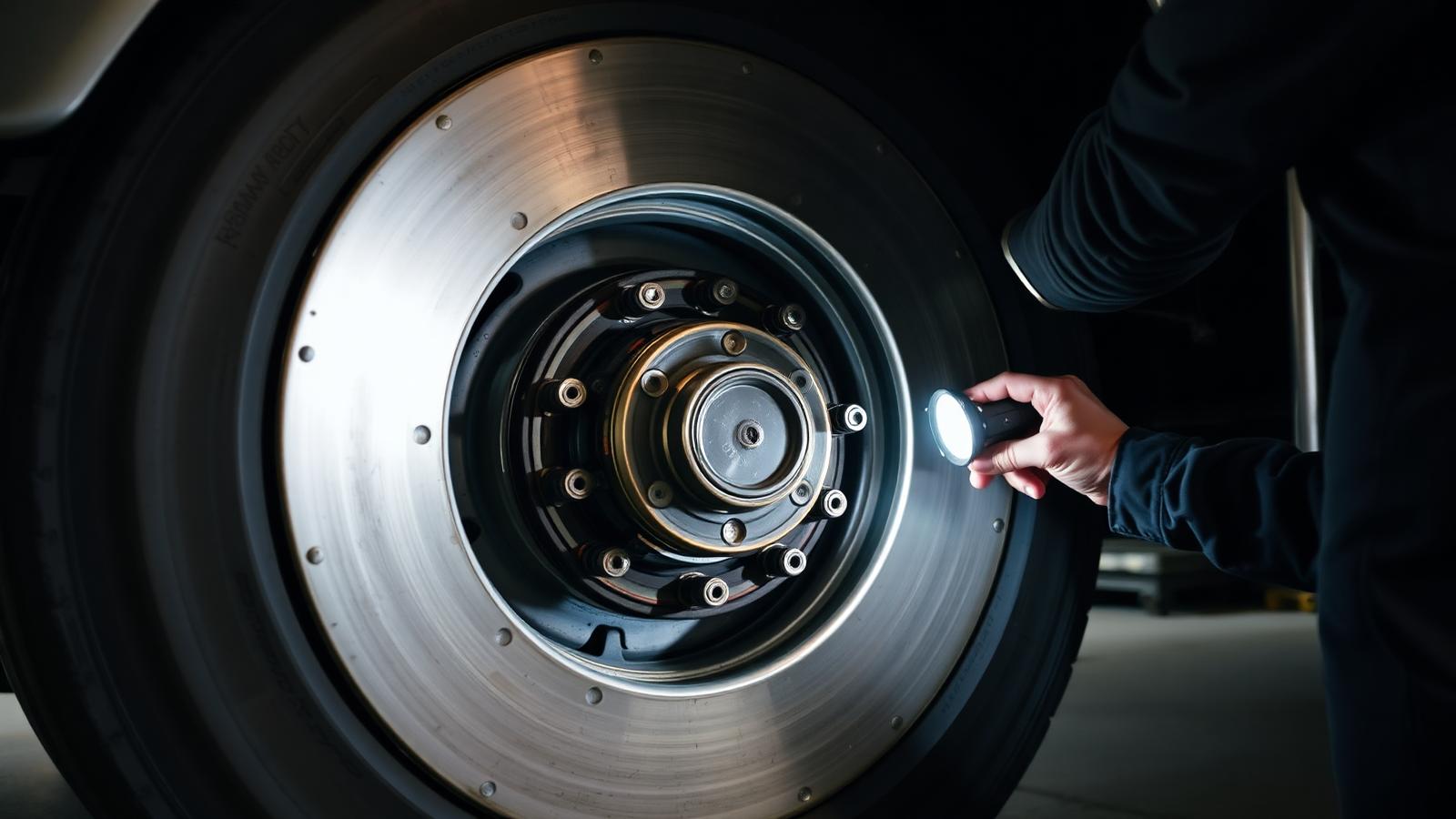
During pre-trip and post-trip inspections, look at the visible areas of drums and rotors. Check the rotor's friction surface for cracks or fractures and the drum for cracks reaching the outer edge or missing pieces. Heavy rust across the surface, deep grooves from metal-on-metal contact, or a rotor worn through to its central ventilation channels should be found before a roadside inspection.
A photo of rust, a crack or a groove is not enough for a remote decision. Serviceability depends on its location and severity, manufacturer specifications and limits, and current inspection criteria. There is no single minimum brake lining or pad thickness for every application: axle position, drum or disc design, and air, hydraulic or electric actuation affect the applicable limit.
Check air lines for damage and test the system's function
Follow visible brake tubing and hoses, looking for chafing, kinks, exposure to heat, bulges, improper splices, exposed reinforcement and audible leaks. Fittings must not leak, obstruct flow or impair braking. Record the location and vehicle number when reporting a defect. “Small air leak” alone gives the mechanic little to work with.
Functional checks also cover the low-air warning device, air loss rate, tractor protection system, trailer breakaway system and ABS malfunction lamp. Follow the procedures for the vehicle and its manufacturer. The CVSA inspection procedure calls for 90–100 psi at certain steps. Do not use that number outside the complete safe procedure.
One pushrod stroke limit does not fit the whole vehicle
Identify each brake chamber's type and size, including whether it is a standard-stroke or long-stroke chamber, before judging pushrod travel. Different chambers have different adjustment limits. Applying a familiar inch measurement to every wheel end without identifying the chamber can flag a sound brake or miss one that is actually beyond its limit.
Air-braked vehicles manufactured on or after October 20, 1994, that are subject to the federal requirement must have self-adjusting brake adjusters (SABAs). Excessive stroke calls for inspection of the foundation brake, drum or rotor, adjuster and whole wheel end. Manually backing a self-adjuster into range may change the reading temporarily without correcting the cause.
Separate driver observations from work requiring a qualified person
Drivers can report visible damage, unusual warning lamps, leaking air or a change in brake feel. Going under the vehicle, releasing spring brakes, measuring stroke, determining adjustment limits or dismantling and repairing brakes requires a level, safe location, properly chocked wheels, and personnel qualified for the task and familiar with the vehicle procedure. A fleet must keep evidence of its brake inspector's qualifications while the person serves in that role and for one year afterward.
Tie the paperwork to the vehicle
When a defect could affect safe operation or cause a mechanical breakdown, the Driver Vehicle Inspection Report (DVIR) should identify the vehicle and the particular problem. Before the vehicle operates again, the fleet should correct safety-related defects and certify the repairs on the report. Applicable DVIRs and certifications are generally kept for three months. “Brakes checked” identifies neither the wheel end nor whether a reported problem was fixed.
Fleet systematic inspection, repair and maintenance records should identify the vehicle, maintenance items and due dates, and the date and nature of each inspection, repair and service. For a vehicle the carrier controls for 30 consecutive days, the records are generally kept for one year and for six months after the vehicle leaves its control. Each unit in a combination must have passed a periodic inspection within the preceding 12 months and carry evidence. Periodic inspection reports are generally kept for 14 months. An annual inspection cannot establish that the brakes are safe for today's trip.
If a roadside inspection report has already been issued
Correct each defect on the roadside inspection report. A vehicle placed out of service (OOS) cannot return to operation until the repairs listed on the notice are complete. Generally the fleet should complete the carrier certification within 15 days of inspection, return it to the listed address if the issuing state requires it, and retain a copy for 12 months. The best preparation for Brake Safety Week is a record tying each defect to its work order, repairer, recheck and vehicle status.
Disclaimer: This article draws on Title 49 of the Code of Federal Regulations and Federal Motor Carrier Safety Administration (FMCSA) public materials, together with CVSA's 2026 event notice, public inspection procedures and educational materials, as of July 28, 2026. CVSA is a nonprofit alliance; its guidance supplements federal rules, manufacturer requirements and enforcement criteria. This article provides general information, not legal, repair, fleet compliance or individual professional advice, and cannot guarantee an inspection pass or protection from violations or an out-of-service order. Component limits, procedures, qualifications, recordkeeping rules and out-of-service criteria can change. Consult the current eCFR, FMCSA and CVSA materials, manufacturer documents and official enforcement records. Vehicle design, component models, wear and repair history vary. Only people with the relevant knowledge, training and authorization should go underneath a vehicle, release spring brakes, measure, adjust or repair components, using safe procedures. The author and publisher accept no liability for losses arising from independent decisions or actions based on this article.
Commercial Vehicle Safety Alliance. “CVSA’s Brake Safety Week Scheduled for Aug. 23-29.” CVSA, 29 May 2026, https://cvsa.org/news/2026-bsw-dates/. Accessed 28 July 2026.
Commercial Vehicle Safety Alliance. “2026 Brake Safety Week Focus Area.” CVSA, https://cvsa.org/programs/operation-airbrake/focus-area/. Accessed 28 July 2026.
Commercial Vehicle Safety Alliance. “2026 Brake Safety Week Drum and Rotor Flyer.” CVSA, 2026, https://cvsa.org/wp-content/uploads/2026-BSW-Flyer-English.pdf. Accessed 28 July 2026.
Commercial Vehicle Safety Alliance. “Operation Airbrake Inspection Procedure.” CVSA, https://cvsa.org/programs/operation-airbrake/operation-airbrake-inspection-procedure/. Accessed 28 July 2026.
Commercial Vehicle Safety Alliance. “FAQs: Brake Systems and Inspections.” CVSA, https://cvsa.org/programs/operation-airbrake/faqs-brake-systems-and-inspections/. Accessed 28 July 2026.
Commercial Vehicle Safety Alliance. “Air Brake Pushrod Stroke Brochure.” CVSA, https://cvsa.org/wp-content/uploads/Airbrake-Pushrod-Stroke-Brochure.pdf. Accessed 28 July 2026.
Commercial Vehicle Safety Alliance. “S-Cam Brake Inspection Checklist.” CVSA, https://cvsa.org/wp-content/uploads/Brake-Inspection-Check-List.pdf. Accessed 28 July 2026.
Commercial Vehicle Safety Alliance. “Brake Safety Campaigns.” CVSA, https://cvsa.org/programs/operation-airbrake/brake-safety-campaigns/. Accessed 28 July 2026.
Electronic Code of Federal Regulations. “49 CFR Part 393, Subpart C: Brakes.” eCFR, https://www.ecfr.gov/current/title-49/subtitle-B/chapter-III/subchapter-B/part-393/subpart-C. Accessed 28 July 2026.
Electronic Code of Federal Regulations. “49 CFR Part 396: Inspection, Repair, and Maintenance.” eCFR, https://www.ecfr.gov/current/title-49/subtitle-B/chapter-III/subchapter-B/part-396. Accessed 28 July 2026.