
2026 English-Language Roadside Enforcement: What Truck Drivers and Fleets Need to Do
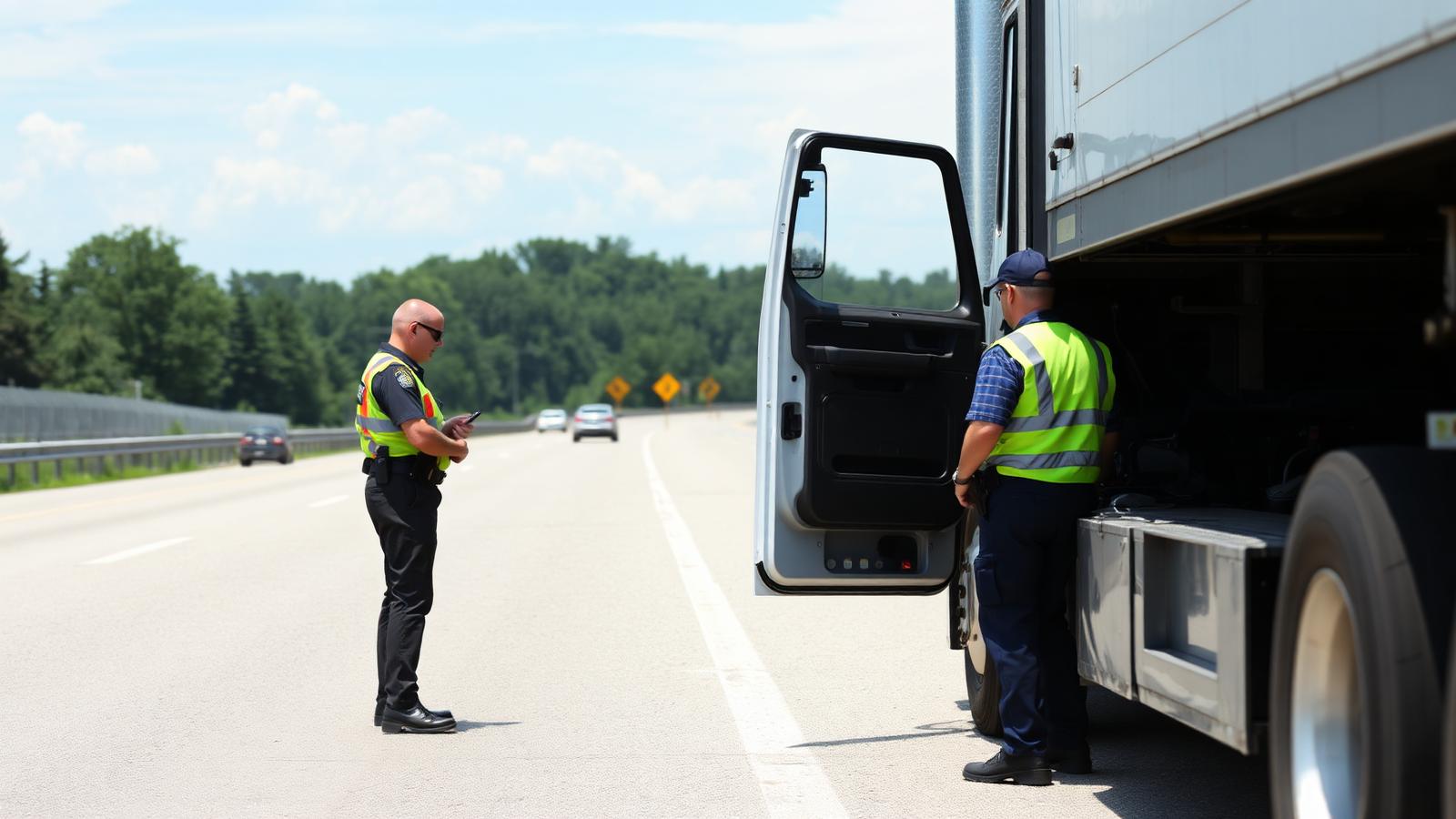
At a roadside inspection, the officer usually begins by speaking to the driver in English. A driver may know the route and handle the load every day, yet under pressure do little more than hand over documents, open a translation app or wait for dispatch to answer by phone. The practical question is whether the driver can independently handle basic communication about safety and the inspection.
English language proficiency (ELP) did not become a driver qualification in 2026. Under 49 CFR § 391.11(b)(2), drivers need enough English to converse with the public, understand highway signs and signals, respond to official inquiries and instructions, and complete reports and records. What changed in 2026 was the enforcement policy. On April 16, FMCSA issued MC-SEE-2026-0002, replacing its 2025 memorandum and explaining how federal personnel assess and enforce the existing requirement at roadside (“49 CFR § 391.11”; “FMCSA ELP Guidance Roadside Policy”).
The 2026 memorandum is an internal agency enforcement policy for FMCSA personnel inspecting commercial motor vehicles (CMVs) in U.S. interstate commerce. Do not apply it indiscriminately to intrastate transportation or every state or local inspection. The California Highway Patrol has adopted and updated the 2026 North American Standard Out-of-Service Criteria in state regulations. Which rules govern an inspection still depends on the operation and inspecting agency (“Roadside Enforcement Policy FAQs”; “Regulatory Actions”).
The inspection does not start with a standard written test. Initial contact is in English. If the driver's responses raise concerns, the officer proceeds to a two-step assessment. Step 1 is a driver interview in English. The driver cannot rely on an interpreter, I-Speak card, cue card, smartphone app or telephone interpretation service to answer. If the driver does not pass Step 1, the officer records the violation and does not proceed to Step 2 (“FMCSA ELP Guidance Roadside Policy”; “Roadside Enforcement Policy FAQs”).
Only after passing the interview does the driver move to Step 2: highway traffic sign recognition. This includes signs in the Manual on Uniform Traffic Control Devices (MUTCD) and may include dynamic or changeable message signs. Official materials do not publish a uniform question bank, number of questions, passing score or standard duration. A memorized answer sheet is not proof of qualification. The driver needs to know what to do when a sign appears (“FMCSA ELP Guidance Roadside Policy”; “MUTCD”).
Build preparation into driver qualification rather than cramming the day before a long trip. FMCSA suggests asking in English about origin and destination, driving and duty hours, records of duty status (RODS) or logbook, license, shipping papers, vehicle equipment and hazardous materials when applicable. Bilingual explanations can help during training, but in a mock Step 1 let the driver answer without translation tools. For signs, check that the driver understands their meaning, not just the words (“What Should a Motor Carrier Do”).
If an FMCSA inspector finds the driver unqualified, the inspector records the violation and issues an immediate out-of-service (OOS) order, except in the limited U.S.–Mexico border commercial zone circumstances. The FAQ lists OOS code 391.11B2Q for official inquiries in English and 391.11B2S for sign recognition. The driver may not resume interstate CMV driving until the issue is resolved. There is no fixed OOS period for everyone, and no private training certificate automatically lifts the order (“FMCSA ELP Guidance Roadside Policy”; “Roadside Enforcement Policy FAQs”; “49 CFR § 390.5T”).
Two exceptions are often overstated. For a U.S.–Mexico border commercial zone, the current trip matters. A trip that extends beyond the zone can still result in an OOS order. Only a trip entirely within the zone uses the non-OOS code 391.11B2Z. The hearing-standard exception applies only to drivers who hold an FMCSA hearing exemption and can read and write English. It is not a general English-language exemption (“FMCSA ELP Guidance Roadside Policy”; “Roadside Enforcement Policy FAQs”).
If a report is issued, obey the order at the scene first. Keep the report number, violation code, time and location, the driver's account of the conversation and relevant documents together. For inaccurate, incomplete or duplicate driver, vehicle, location, violation or other report data, submit a Request for Data Review (RDR) through FMCSA DataQs with evidence tied to the disputed point. Later training, improved English or correction of the problem does not establish that the original record was wrong. DataQs does not guarantee a change (“DataQs Help Center: General Questions”; “DataQs Help Center: Request for Data Review”).
Include English checks in onboarding, refresher training and pre-dispatch routines for interstate work. Have someone familiar with roadside and dispatch operations ask the driver to describe the route, hours, cargo and vehicle condition independently. Use real signs and electronic message boards to check understanding. Record the date, evaluator, topics covered and retraining needs. This internal record cannot replace the officer's judgment in the field or guarantee a pass.
Drivers need neither complex sentences nor a particular accent. Start with the everyday questions: Where are you coming from and going? What are you carrying? How long have you driven today? Where are your logs? Does the vehicle have any known problems? Assign responsibility within the fleet for assessment, retraining and keeping inspection records. That preparation is more reliable than finding a last-minute interpreter, memorizing answers or buying a certificate without official standing.
Disclaimer: This article draws on public information from Title 49 CFR, FMCSA, the Federal Highway Administration, California Highway Patrol and FMCSA DataQs as of July 21, 2026. It provides general information, not legal, employment, immigration, training certification or individual compliance advice. Qualifications, assessments, codes, OOS procedures, border-zone exceptions, hearing exemptions and data review procedures can change. Use the inspecting agency's records and current materials from the eCFR, FMCSA, CHP, DataQs and other applicable authorities. The training suggestions are internal fleet practices, not an official question bank, test, certificate or guarantee, and cannot replace an officer's judgment. Review the actual qualifications, operation, inspection facts and records. Consult a qualified attorney or professional about OOS orders, employment decisions, major disputes or legal action. The author and publisher accept no liability for losses arising from reliance on this article.
Electronic Code of Federal Regulations. “49 CFR § 391.11: General Qualifications of Drivers.” eCFR, https://www.ecfr.gov/current/title-49/subtitle-B/chapter-III/subchapter-B/part-391/subpart-B/section-391.11. Accessed 21 July 2026.
Federal Motor Carrier Safety Administration. “FMCSA ELP Guidance Roadside Policy (MC-SEE-2026-0002).” U.S. Department of Transportation, 16 Apr. 2026, https://www.fmcsa.dot.gov/regulations/enforcement/fmcsa-elp-guidance-roadside-policy-mc-see-2026-0002. Accessed 21 July 2026.
Federal Motor Carrier Safety Administration. “English Language Proficiency Roadside Enforcement Policy FAQs.” U.S. Department of Transportation, 16 Apr. 2026, https://www.fmcsa.dot.gov/regulations/english-language-proficiency-roadside-enforcement-policy-faqs-0. Accessed 21 July 2026.
Federal Motor Carrier Safety Administration. “What Should a Motor Carrier Do to Assess a CMV Driver’s English Language Proficiency (ELP) during the Driver Qualification Process?” U.S. Department of Transportation, 22 May 2025, https://www.fmcsa.dot.gov/regulations/what-should-motor-carrier-do-assess-cmv-drivers-english-language-proficiency-elp-during. Accessed 21 July 2026.
Federal Highway Administration. “Manual on Uniform Traffic Control Devices (MUTCD).” U.S. Department of Transportation, https://mutcd.fhwa.dot.gov/. Accessed 21 July 2026.
Electronic Code of Federal Regulations. “49 CFR § 390.5T: Definitions.” eCFR, https://www.ecfr.gov/current/title-49/subtitle-B/chapter-III/subchapter-B/part-390/subpart-A/section-390.5T. Accessed 21 July 2026.
California Highway Patrol. “Regulatory Actions.” State of California, https://www.chp.ca.gov/News-Alerts/Regulatory-Actions. Accessed 21 July 2026.
Federal Motor Carrier Safety Administration. “DataQs Help Center: General Questions.” U.S. Department of Transportation, https://dataqs.fmcsa.dot.gov/HelpCenter/Faqs?topic_id=1. Accessed 21 July 2026.
Federal Motor Carrier Safety Administration. “DataQs Help Center: Request for Data Review.” U.S. Department of Transportation, https://dataqs.fmcsa.dot.gov/HelpCenter/Faqs?topic_id=2. Accessed 21 July 2026.