
"Applied" Isn't "Authorized": A First-Dispatch Compliance Checklist for New Fleets
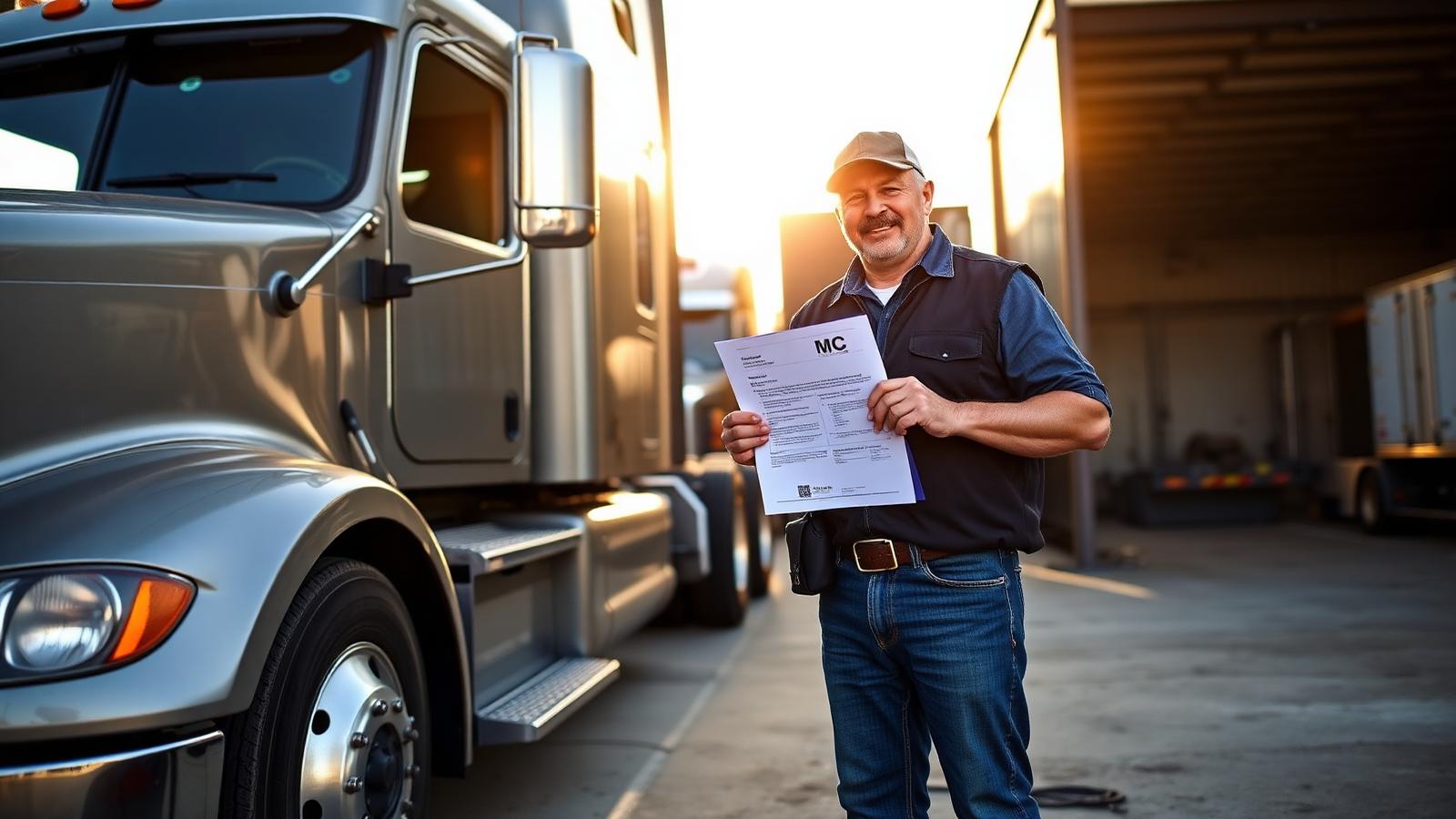
Before its first dispatch, a new fleet can mistake “number assigned” for “ready to operate.” Finding a number in a system proves only that the application reached a certain stage. Federal operating authority may still be pending, insurance or BOC-3 may not be on file, or credentials may be missing from the vehicle. Any of these can delay departure. A new driver with a license in hand still needs the fleet's required onboarding checks.
Define the operation before applying. Confirm the legal entity and base jurisdiction; whether the operation is intrastate, interstate or international; and whether the carrier hauls customers' property for compensation or only its own goods as a private carrier. For each vehicle, record axle count, actual gross vehicle weight (GVW), gross vehicle weight rating (GVWR), registered gross vehicle weight and gross combination weight. A leased-on owner-operator also needs to know whose federal operating authority covers the vehicle.
Start by distinguishing USDOT from MC. A USDOT number primarily identifies a carrier for safety registration. An MC number is generally the docket number associated with operating authority. Not every fleet with a USDOT number needs MC authority. In general, a business transporting federally regulated goods for others for compensation in interstate commerce must also obtain the appropriate authority (“Get Operating Authority”).
FMCSA uses Motus, the USDOT Registration System, for authority applications. The application fee for permanent authority is $300 per authority type; mistaken applications generally are not refundable. After paying and receiving a docket number, verify that the applicable insurance filing and Form BOC-3 designation of process agents are on file, and that the company's Motus account shows the authority has been granted. The fleet should make that final check even if it used an agent (“Move into Motus”; “Get Operating Authority”; “Navigating Your Company Account in Motus”; “Form BOC-3”).
Check Unified Carrier Registration (UCR) separately. Covered interstate or international carriers, private carriers and certain other entities register annually. For 2026, the zero-to-two-vehicle bracket for carriers or freight forwarders was $46. An established covered business should normally complete registration before January 1 of the registration year. A new business starting midyear should check the official UCR system and register for the year if applicable before beginning covered operations. There is no nationwide paper UCR credential to carry; verify annual status and payment records (“Do I Need to Register?”; “Fee Brackets”; “Frequently Asked Questions”).
Next check the vehicles. The International Registration Plan (IRP) apportions registration fees among member jurisdictions; it does not confer operating authority. A vehicle operating in two or more member jurisdictions is generally apportionable if it has two axles and gross or registered gross weight over 26,000 pounds, three or more axles regardless of weight, or combination weight over 26,000 pounds. Once apportioned registration is complete, place the cab card in the vehicle it identifies. Do not share one card among trucks (“Section 1: Introduction”; “Chapter 2: IRP Provisions”).
The International Fuel Tax Agreement (IFTA) covers fuel use taxes across jurisdictions. Its vehicle thresholds resemble IRP's, but the programs serve different purposes. A California licensee should keep a copy of the IFTA license in each qualified motor vehicle and affix two decals, one per side of the cab. Quarterly returns are generally due April 30, July 31, October 31 and January 31 of the next year. File even for a licensed quarter without travel. Keep mileage and fuel records matched by vehicle, date and jurisdiction. An application receipt cannot stand in for a valid license and decals; if travel is needed before they are ready, obtain fuel trip permits as required by the jurisdictions traveled (“Publication 50”).
In California, distinguish the state CA number from a federal MC number. The California Highway Patrol (CHP) issues the CA number, which serves as the Motor Carrier Permit (MCP) number. California DMV lists, among other covered operations, trucks with two or more axles and a GVWR over 10,000 pounds, and other vehicles transporting property for compensation. For application or renewal, address financial responsibility, workers' compensation and controlled substances and alcohol testing (CSAT) program self-certification as applicable. Check Employer Pull Notice (EPN) requirements when hiring drivers whose jobs require a CDL (“Motor Carrier Permit FAQs”).
A license photocopy is not a driver qualification file. Before a new driver operates, build the file as applicable and check CDL class and endorsements, medical qualification, driving record and prior-employer safety history. For drivers subject to 49 CFR Part 382, the employer must complete a Drug and Alcohol Clearinghouse pre-employment query before safety-sensitive functions and obtain required consents and annual queries thereafter. Before the first dispatch, identify applicable hours-of-service (HOS) and electronic logging device (ELD) rules and establish procedures for pre-trip inspection, reporting defects and making repairs. Retain the required time, inspection, defect and maintenance records (“49 CFR Part 391”; “49 CFR Part 395”; “49 CFR Part 396”; “Employer Queries and Consent Requests”).
Before accepting the first load, match the requirements to official records and the actual vehicle. For the company, check legal name, address, USDOT number, granted authority, insurance, BOC-3, current UCR, CA number and MCP status. For the vehicle, check its IRP cab card, IFTA license copy and decals. For the driver, check the qualification file, Clearinghouse query and required records. Place onboard credentials in the assigned vehicle; centrally file application receipts, status checks and filings.
From day one, retain mileage, fuel, hours, roadside inspection, defect and repair records by vehicle and driver. Applicable new interstate carriers enter the New Entrant Safety Assurance Program. The initial monitoring period is 18 months; a Safety Audit usually occurs within 12 months after operations begin. Do not wait for an audit notice to reconstruct the records. Put annual UCR, quarterly IFTA, IRP and MCP renewals, and annual Clearinghouse queries on one compliance calendar. Check status before dispatch as needed and review each item before it expires (“New Entrant Safety Assurance Program”).
This article draws on public information from Title 49 CFR, FMCSA, the UCR Plan, California DMV, CHP and the California Department of Tax and Fee Administration as of July 14, 2026. It provides general information, not legal, tax, insurance, registration or individual compliance advice. Systems, thresholds, fees, deadlines, credentials and enforcement practices can change. Check current agency sources, actual operations, lease agreements, formal documents and official records. Cargo, vehicles, working relationships, territory and authority differ by fleet; the checklist cannot decide an individual case. Consult the relevant authority or a qualified professional about hazardous materials, household goods, passengers, cross-border operations, complex leases or other high-risk work. The author and publisher accept no liability for losses arising from reliance on this article.
Federal Motor Carrier Safety Administration. “Move into Motus.” U.S. Department of Transportation, 18 May 2026, https://www.fmcsa.dot.gov/registration/move-motus. Accessed 14 July 2026.
Federal Motor Carrier Safety Administration. “Get Operating Authority (Docket Number).” U.S. Department of Transportation, 20 Apr. 2026, https://www.fmcsa.dot.gov/registration/get-mc-number-authority-operate. Accessed 14 July 2026.
Federal Motor Carrier Safety Administration. “Navigating Your Company Account in Motus.” U.S. Department of Transportation, May 2026, https://www.fmcsa.dot.gov/sites/fmcsa.dot.gov/files/2026-05/Motus%20Navigating%20Company%20Acct%20Page%20Job%20Aid.pdf. Accessed 14 July 2026.
Federal Motor Carrier Safety Administration. “Form BOC-3: Designation of Agents for Service of Process.” U.S. Department of Transportation, 30 June 2026, https://www.fmcsa.dot.gov/registration/form-boc-3-designation-agents-service-process. Accessed 14 July 2026.
Federal Motor Carrier Safety Administration. “New Entrant Safety Assurance Program.” U.S. Department of Transportation, https://www.fmcsa.dot.gov/safety/new-entrant-safety-assurance-program. Accessed 14 July 2026.
Unified Carrier Registration Plan. “Do I Need to Register?” UCR Plan, https://plan.ucr.gov/do-i-need-to-register/. Accessed 14 July 2026.
Unified Carrier Registration Plan. “Fee Brackets.” UCR Plan, https://plan.ucr.gov/fee-brackets/. Accessed 14 July 2026.
Unified Carrier Registration Plan. “Frequently Asked Questions.” UCR Plan, https://plan.ucr.gov/frequently-asked-questions/. Accessed 14 July 2026.
California Department of Motor Vehicles. “Section 1: Introduction.” California Commercial Driver’s Handbook, State of California, https://www.dmv.ca.gov/portal/handbook/commercial-driver-handbook/section-1-introduction/. Accessed 14 July 2026.
California Department of Motor Vehicles. “Chapter 2: IRP Provisions.” International Registration Plan Handbook, State of California, https://www.dmv.ca.gov/portal/handbook/irp/chapter-2-irp-provisions/. Accessed 14 July 2026.
California Department of Tax and Fee Administration. “Publication 50: California IFTA Guide to the International Fuel Tax Agreement.” Jan. 2025, https://www.cdtfa.ca.gov/formspubs/pub50.pdf. Accessed 14 July 2026.
California Department of Motor Vehicles. “Motor Carrier Permit FAQs.” State of California, https://www.dmv.ca.gov/portal/vehicle-industry-services/motor-carrier-services-mcs/motor-carrier-permits/motor-carrier-permits-mcp-faqs/. Accessed 14 July 2026.
Electronic Code of Federal Regulations. “49 CFR Part 391: Qualifications of Drivers and Longer Combination Vehicle Driver Instructors.” eCFR, https://www.ecfr.gov/current/title-49/subtitle-B/chapter-III/subchapter-B/part-391. Accessed 14 July 2026.
Electronic Code of Federal Regulations. “49 CFR Part 395: Hours of Service of Drivers.” eCFR, https://www.ecfr.gov/current/title-49/subtitle-B/chapter-III/subchapter-B/part-395. Accessed 14 July 2026.
Electronic Code of Federal Regulations. “49 CFR Part 396: Inspection, Repair, and Maintenance.” eCFR, https://www.ecfr.gov/current/title-49/subtitle-B/chapter-III/subchapter-B/part-396. Accessed 14 July 2026.
Federal Motor Carrier Safety Administration. “Employer Queries and Consent Requests.” Drug & Alcohol Clearinghouse, https://clearinghouse.fmcsa.dot.gov/FAQ/Topics/Employers%2Cqueries-and-consent-requests. Accessed 14 July 2026.